
Why Homes Can Feel “Flat” Without Layering
Kitchen and bath remodels can feature beautiful finishes, premium fixtures, and quality craftsmanship, yet still feel visually flat. Often, the missing element is depth. When every finish matches too closely, colors remain overly uniform, and fixture selections stay overly simple, the result can feel sterile rather than inviting. Many homeowners mistake a clean aesthetic for a fully realized design.
The most memorable interiors offer something more. Through visual depth, tonal contrast, layered textures, and intentional transitions between materials, a room begins to feel warm, sophisticated, and thoughtfully curated. This refined layering is what separates a space that simply looks newly remodeled from one that feels polished, welcoming, and truly custom.
At McDaniels Kitchen and Bath, we believe exceptional remodeling is found in these subtle details. Thoughtful layering helps create kitchens and bathrooms that feel timeless, elevated, and tailored to the way you live. Here, we explore what refined layering means and how it can transform the overall feel of your home remodel.
What Refined Layering Really Means
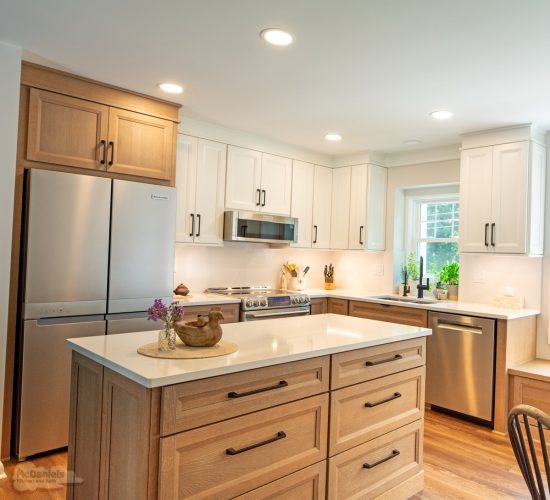
Layering is not just about decorating, it is a design strategy. When you layer to create depth in your design, you are not simply adding accessories, rugs, or countertop decorative items. Instead, it is the deliberate use of contrasting but complementary materials, multiple tones within one palette, varied lighting sources, layered cabinetry details, and architectural features.
This purposeful layering with carefully chosen materials, colors, and textures creates movement for the eye, warmth, depth, and a curated custom feel. The best layered interiors feel effortless because every element works together in harmony. Intentional design planning helps you to find this balance when creating your new kitchen or bathroom.
Layering with Materials: Wood, Stone, and Metal
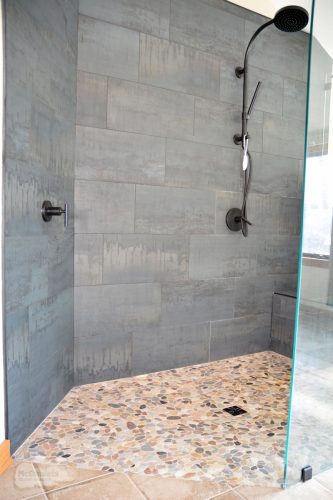
Luxury spaces rarely rely on one material, color, or texture alone. Combining different materials in a kitchen or bathroom design lets you add richness and texture in your design, while avoiding monotony. Consider including a range of materials such as warm wood cabinetry or floating shelves, natural or engineered stone countertops and walls, and metal accents in brushed brass, matte black, polished nickel, or stainless steel. Introduce tactile contrasts with, for example, smooth stone set against visible wood grain or soft painted finishes against reflective fixtures.
For kitchens, layered materials could include a two tone cabinet design with a stained island and painted perimeter cabinets, paired with a contrasting countertop or textured tile backsplash. For bathrooms, you could pair stone or textured tile shower walls with a natural wood vanity and metallic hardware. Create balance with materials that complement each other rather than compete with one another, working together to form a cohesive design.

Layering with Color and Tone
Layering different colors and tones helps a bathroom or kitchen design to feel more sophisticated rather than sticking to a single dominant shade throughout, which can feel flat. Incorporate tonal variation, such as combining soft whites, warm greiges, charcoal accents, or muted wood undertones to elevate your space and make your design feel more sophisticated.
Real depth in a design often comes from adding subtle undertones rather than bold colors, so carefully consider your chosen colors and tones to find the right mix for your home. Remember that subtle contrasts often have the biggest impact. Use your cabinetry, backsplash, walls, flooring, and textiles to introduces slightly different shades in a cohesive color palette.

Layering Through Your Lighting Design
Lighting is one of the most overlooked layers in remodeling that has the power to completely change the look and feel of your space. A layered lighting design includes ambient lighting, task lighting, accent lighting, and decorative lighting. Layered lighting affects mood, functionality, and how colors, materials, finishes, and textures appear throughout the day.
For kitchen designs this could include pendants over islands, recessed ceiling lights, in cabinet lighting, undercabinet lights, and chandeliers. Bathroom designs typically combine vanity sconces, recessed lighting, LED lit mirrors, shower lighting, and sometimes pendants or accent lighting in niches or highlighting shelves. Make sure you plan your lighting at the initial design stage and factor in natural light through windows, glass doors, and skylights.

Creating Depth Without Visual Clutter in Kitchen Designs
Sophisticated kitchen designs will feel layered without appearing too busy by carefully choosing colors, materials, and textures for your space. Remember that layering in a kitchen design is about more than just adding extra details to your kitchen. It is about including thoughtfully chosen features that create depth in your design.
The McDaniels design team can help you create this depth through built-in architectural features for your new kitchen, such as cabinet details, furniture-style kitchen islands, mixed metal finishes, open shelving or niches, and backsplash features. Hidden storage also contributes to your kitchen’s visual refinement, as it helps to keep counters and other surfaces clear so your materials and textures become the focal point. The result is a kitchen that feels custom, dimensional, and calm rather than overcrowded.

Adding Warmth to Bathroom Designs
Bathrooms can quickly feel harsh rather than sophisticated because of the hard surfaces that are naturally part of a bathroom design. In your effort to create a clean, easy-to-maintain bathroom designed for daily life you may sacrifice comfort and warmth. Layering softens the environment and gives your design depth through combining wood vanities with mixed tile textures, framed mirrors, warm metallic plumbing fixtures, and integrated lighting.
Pairing matte and polished finishes is an easy way to create sophistication in a bathroom design. Storage niches, floating shelves, ledges, and decorative stone details also offer an easy way to layer textures, colors, and accessories to enhance your bathroom’s style. A refined bathroom should feel airy but also grounded, and layering is a perfect way to achieve this. It helps you to create comfort and personalize your bathroom while still preserving a clean and luxurious aesthetic.

Professional Design Services Prevent Over-Design
When planning your new bathroom, there is a balance you must achieve between a layered design that has depth and an overdone space that winds up being cluttered. Successful layering requires restraint and proportion, and many homeowners are eager to know how to add design details without making their room feel busy.
The answer is to work with a professional and experienced design team. They help you decide where to repeat finishes, where to create contrast, how many focal point materials to include without making it distracting, and how to guide the eye throughout the room.
Expert planning to coordinate these elements is more important than individual product selections, and the right design team will be able to listen to your goals and style preferences and guide you through this process to create the perfect look and feel for your new kitchen or bathroom.

Frequently Asked Questions for Refined Layering in Kitchen and Bathroom Design
When planning a new kitchen or bathroom design you want to include features that balance your space and make it feel inviting. Here are a few of the questions frequently asked about how to layer colors, textures, and lighting to create a refined and sophisticated design for your home.
- What does layering mean in interior remodeling? In the context of remodeling kitchens and bathrooms, layering involves combining texture, tone, lighting, and materials for visual depth and style sophistication.
- How do you make a kitchen look more high end? Use key features carefully layered in your design, such as custom cabinetry details, mixed materials, layered lighting, and tonal contrast.
- How do you make a bathroom design feel warmer and more luxurious? Use wood tones, soft lighting, mixed tile finishes, and warm metals to infuse your bathroom with warmth and a luxurious style.
- Can layered designs still look clean and modern? Yes, layering adds sophistication without clutter when your design is professionally planned and carefully curated.
- Is layering only suited to large kitchens and bathrooms? No, even compact spaces benefit from thoughtfully layered materials, textures, and lighting.
Elevate Your Remodel Beyond the Basics
The most memorable kitchens and bathrooms are never defined by individual finishes alone. Their beauty comes from the way each material, tone, texture, and lighting choice works together to create a sense of depth, warmth, and effortless sophistication. That is the power of refined layering—it transforms a remodel from visually appealing to truly inviting.
At McDaniels Kitchen and Bath, we believe every detail should contribute to a space that feels polished, intentional, and designed around the way you live. If you are ready to elevate your kitchen or bathroom beyond the basics, our team is here to help you create a remodel with timeless custom appeal.